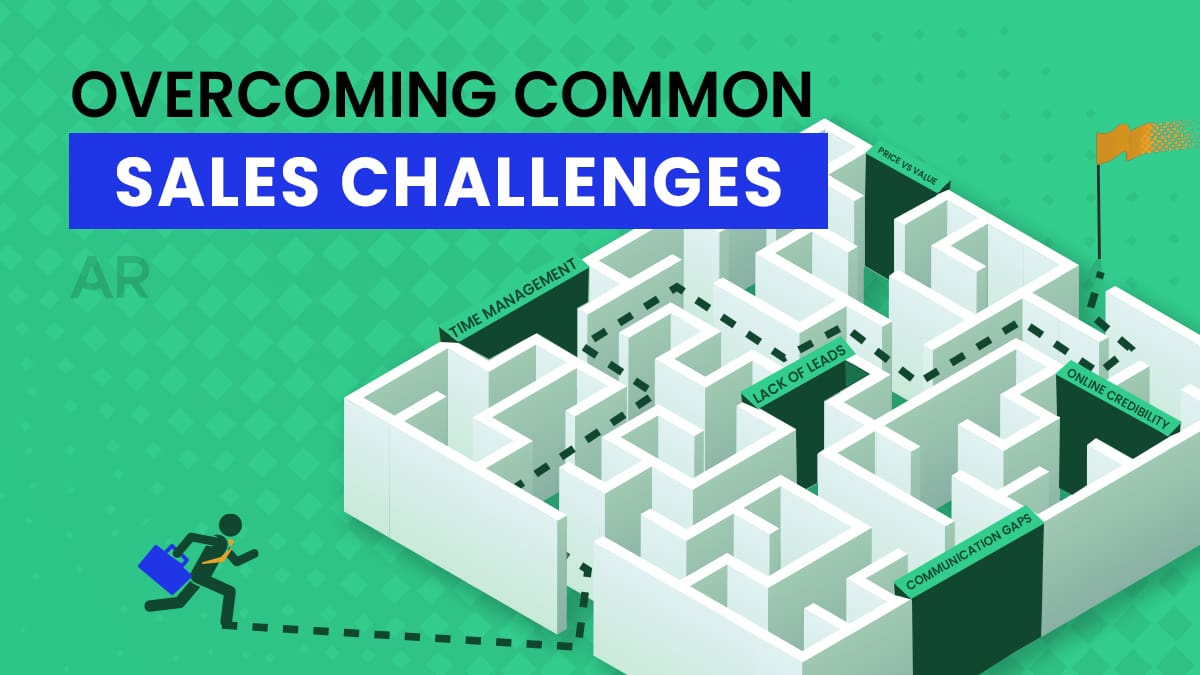
There are 4 common challenges that impact independent insurance agencies, and you’re more than likely seeing the effects in your own business.
These challenges are holding you back from the level of growth you planned for this year, so you might not be hitting your goals.
These challenges are something you can easily overcome; it just takes the right approach.
Here are the 4 challenges that your agency might be facing right now:
- Time management. More than half of agencies spend over 70% of their time on manual, repetitive tasks, leaving less time for revenue-driven activities.
- Lack of new, quality leads. Many agencies are struggling to generate new leads online and are relying too heavily on referrals for business growth.
- Push for price over value. Competitors in the industry prioritize price above all else, and that trickles down to your clients and prospects, who look at price over actual value.
- Overwhelming with too much information. New prospects are being turned off by the amount of details and the delivery of that information, preferring instant gratification of hands-free quotes.
The good news is that each of these challenges has a practical solution, and most agencies already have what they need to address them.
How can your insurance agency save time?
First, let’s dig into the problem here. When I ran a survey earlier this year, over half of agencies told me that their teams spend 60-70% of their time on administrative tasks.
You can read the findings from that survey here, but the gist is this: if your agency is in that boat, multiply that by the entire year, and you’ll quickly see just how much opportunity you are leaving on the table simply by not having the capacity to do more proactive sales outreach.
The answer isn’t to just hire more people, but rather, to streamline your agency workflows and processes.
To do this, there are a few simple steps you need to take in order to audit the situation:
- Have your team audit the time they spend on repetitive tasks versus the time they spend actually communicating with clients. Break that down into a week.
- Identify the tasks they list most frequently as taking up the majority of their time.
- Look for a technology solution that helps address that by automating or reducing the time spent on those tasks.
Every agency is going to have slightly different results from this, but I’ll go through one scenario that I’ve found to be quite common in the space, so you can apply the same methodology to this.
Let’s say, for example, your agency is spending a lot of time reaching out to clients and processing renewals. If we break that down, here’s everything they are doing manually, and you can imagine the minutes and hours spent weekly to:
- Export a list of clients with upcoming renewals from your AMS.
- Send an email to each client and reply to each of them.
- Send follow-up emails for clients who do not confirm their renewal.
- Process renewal information and update policies as needed.
On the opposite side, here’s how that same agent could save 10+ hours a week by using a marketing automation platform to handle the majority of the manual, repetitive work:
- Set up a renewal campaign in your AMS that triggers an automated email ahead of their policy renewal date.
- Provide an automated follow-up and thank you to clients who renew.
- Route any email replies directly to the agent associated with that client in the AMS.
As you can see, with the addition of automation technology in this example, you can directly attribute time savings, allowing that agent to redirect that additional time back into their day to follow up on leads and conduct outreach focused on bringing in new business or building relationships with current clients.
Again, you can take this approach and apply it to areas where you find capacity gaps and time constraints impacting your team. There will be different solutions, but in general, when it comes to streamlining workflows, I’ve found that most agencies have seen the best results by leaning into marketing automation for client communications and AI for content creation and organization.
How can your insurance agency get more qualified leads?
We get a lot of agencies reaching out to us and asking about purchasing leads.
Our response is that to get the most qualified leads—people who actually want to talk with you and are actively looking for insurance—you need to be where they are looking. On top of that, you need to have a sales funnel in place that drives them to submit a quote request form.
With that in mind, here is everything you need to have in place as a foundation for getting found online, with an online experience that sets you apart and sets the right expectations:
- Accurate directory listings. From Google, to Bing, Facebook, LinkedIn, and others, you want to make sure that your agency’s information online is correct so that they can contact you.
- Professionally designed website. Creating the best first impression starts with a solid website that highlights who you are, how to contact you, and your services.
- AEO and SEO strategy. Your website and online presence need to be set up for success so they actually appear in both traditional and AI search results.
- Google reviews. To stand out and prove your agency’s credibility, you need to gather real client reviews and establish a process to request them over time.
- Lead generation forms. Your website should have dedicated forms for requesting a quote or contacting your agency with a few simple fields to increase submissions.
So, ask yourself if you have these foundations in place. If you do, then this might not be an area you’re having trouble with.
However, if you don’t have some or all of these set in stone, they will be the building blocks of your agency’s growth and success, especially in the digital-first world we live in today.
While you can take the approach of piecemealing these over time, there is a true benefit to establishing this foundation all at once, and in particular, using a singular system, like our insurance website platform, to give you everything you need to show up online and start getting leads that have a high intention, and therefore a stronger chance of signing up with you.
The result of establishing this foundation is exactly what you need to draw in new business and position your agency as a trusted source for insurance in the areas you serve and the coverages you offer. Each part of the puzzle plays an important role in when and where your agency shows up, and how your business is represented online.
How can you debunk the price-over-value narrative?
People are instinctively drawn to price when it comes to insurance, and that influence is hard to overcome.
The real opportunity lies in what an independent insurance agency like yours can do that others in the captive space, for example, cannot. You’re likely appointed with multiple carriers, and on top of that, your business model hinges on the consultative approach.
You need to bridge that gap by demonstrating the value of relationship-driven insurance over transactional insurance.
You have the opportunity to do just that from the moment you first meet with a new client through the initial 90 days of onboarding. That is your window to set the right expectations and make the best possible first impression, so that when it comes time for renewal, they are focused on the value you’ve provided them rather than just the price of the policy they have with you.
The best approach here is to lead with education and information and create a consistent communication flow that ensures you connect with them at key points in those first 90 days and beyond.
Start with a dedicated welcome kit campaign to roll out the red carpet for your new clients. Here’s an example of how you can onboard someone while setting expectations of the level of service you offer and how they can look forward to hearing from your agency often (since that’s one of the strongest retention strategies you can take).
After a new client signs up:
- Send an automated email that welcomes them to the agency and introduces them to their account representative.
- Mail a postcard with a message from the agency owner to express appreciation for signing up.
- Send an email that includes educational information on insurance, what to expect, and how to get in touch with your agency.
- Reach out to the client by phone to ask if there are any questions and address them accordingly.
- Send a Net Promoter Score (NPS) survey to request reviews based on the onboarding experience.
In this example, the agency is using marketing automation to send a welcome kit campaign, direct mail to the client, and an NPS campaign, all without manual intervention at each step.
This is just one way of doing it, of course the best approach for your business will depend on how you communicate with your clients, but the key here is to make sure that the first experience and client journey during that initial onboarding period is positive to establish the value of working with your agency, so they can look beyond the price and transactional approach that others offer.
How can you educate prospects without overwhelming them?
The way you educate prospective clients can have a drastic impact on whether they convert. It’s easy to fall into the trap of overexplaining and complicating insurance, or worse yet, not explaining it well enough.
The best practice here is to provide a balance of education and information in different formats, so they can review their options on their own time and schedule, reducing the pressure of feeling like they are on a sales call.
People want instant gratification, but they also want to feel empowered to make the right choice based on their needs. I’ve found that creating an experience that engages while educating them about insurance has been the sweet spot for insurance agencies.
The ability to interact with the information you’re sharing in a format that isn’t a block of text is what will set your agency apart. These are some of the interactive tools I’ve seen agencies use to great advantage, both for sales and service purposes:
- Video proposals. Agencies are recording and sharing videos with their prospects and clients to review policy details during the quoting process, allowing them to watch back and engage when it works best for them.
- Interactive graphics. Agencies are using tools like our Clickable Coverage® interactive graphics to share with clients and prospects so they can simply click to learn about insurance in an easy-to-use format.
- Personalized producer links. Agencies are using features like Hello Producer to share personalized links to their websites, provide agents’ contact information, and give agents credit for form fills.
Everyone learns in different ways, and being adaptable in how you inform and educate your clients will go a long way toward helping them gain a true understanding and a sense of control over their insurance, while also uncovering any other coverage needs they might not be aware of.
And again, giving them the chance to explore the information on their own in a simple-to-understand format increases the likelihood that they will actually take it in and do something with it.
In fact, agencies that use our Clickable Coverage® feature have seen people stay on their website longer, upwards of six and a half minutes. To put it simply, the longer someone is on your website, the better for you and the greater the chances they’ll follow through with the action you’re expecting (like filling out a quote form).
The common thread across all 4 of these challenges.
When I look at the agencies that are navigating these hurdles most successfully, one thing stands out. They don’t try to solve everything at once. They pick the area where the gap is most visible—whether that’s time, leads, first impressions, or how they communicate—and they build a system around it.
The agencies that struggle most tend to be the ones that recognize the challenge but keep waiting for the perfect moment to address it. There isn’t one. The best time to start building the foundation is now, while the pressure isn’t at its peak.
So take a look at the four areas we covered here and ask yourself honestly: which one is costing you the most right now? Start there. And, if you want to know how you can continue to make an impact in overcoming these challenges and others, be sure to get our Meet and Exceed Client Expectations Guide for Insurance Agencies.
Want to learn more?
If you’re ready to take the next step, our complete insurance marketing platform offers the tools and features your agency needs to stand out and succeed.
From marketing automation that keeps you connected with clients and boosts retention, to insurance websites designed to drive growth, and a suite of marketing tools to meet your needs, Agency Revolution is everything you need after your AMS.
Learn All About Our Complete Insurance Agency Marketing Platform

![[AR] [AR] Website Exclusive Download - General](https://b4106536.assetcdn.net/2.0/4106536/wp-content/uploads/2025/06/AR-AR-Website-Exclusive-Download-General.png?lossy=2&strip=1&webp=1)